

"When efficiency and precision matters"
www.africansurveyors.com
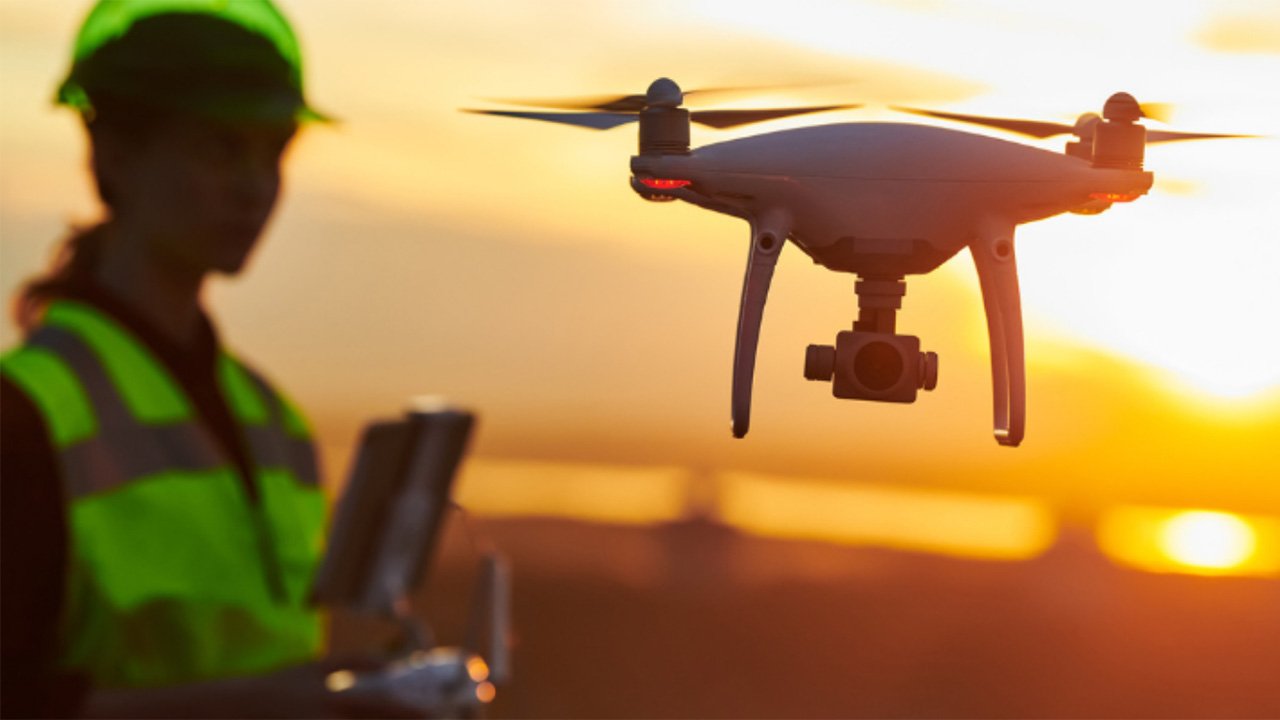
"A single drone flight can collect more data in 30 minutes than a ground crew in an entire day." That’s not a tagline—it’s the reality reshaping the surveying and construction industries. At African Consulting Surveyors, we’ve spent years refining our use of drone surveys to bring clients more detail, faster turnarounds, and a level of efficiency that traditional methods simply can’t match.
As the demand for more accurate, real-time geospatial data grows, drone surveys are rapidly becoming the standard in large-scale mapping, construction progress reporting, infrastructure inspections, and topographic analysis. So what exactly makes drone surveys so powerful? And how do they compare to GPS or other conventional techniques?
Drone surveys involve the use of unmanned aerial vehicles (UAVs) equipped with downward-facing sensors, such as RGB cameras, LiDAR units, or thermal imaging tools. These drones fly over a target area, capturing hundreds or even thousands of overlapping images. Each image is tagged with exact geolocation data.
Through photogrammetry software, these images are stitched into orthomosaic maps, 3D modelling assets, or digital elevation models. This data can then be analyzed, measured, and integrated into platforms like CAD or BIM.
Whether it's for property development, infrastructure planning, or a general site survey, drone-based solutions enable engineers and planners to work from rich, georeferenced data without ever setting foot on unstable terrain.
One of the biggest myths is that drone surveys aren’t as accurate as GPS or total station methods. This simply isn’t true—at least not when drones are used correctly. Modern UAVs can capture 100 points per square meter, compared to GPS surveys that may gather 1 point per 100 m². That’s 10,000 times more data, giving far more granular detail.
With the use of proper ground control points and real-time kinematic (RTK) corrections, drone surveys can deliver sub-5 cm vertical accuracy, often reaching 1 cm in optimal conditions. And when comparing drone-derived elevation models to GPS measurements across thousands of points, the average difference is frequently under 1 mm.
High-resolution drone data may carry slight individual inaccuracies, but the sheer volume of points allows statistical averaging to outperform sparser, high-precision GPS data. More points mean more chances to detect anomalies, terrain features, or potential hazards.
Drone surveys are ideal for volumetric calculations. Measuring stockpiles in mines, quarries, or construction sites becomes safer and far more accurate. Instead of manually climbing a gravel mound, you get high-resolution images turned into 3D surfaces for volume estimation—without interrupting site operations.
Beyond volume, UAVs provide highly accurate contour lines, digital surface models (DSM), digital terrain models (DTM), and 3D textured meshes. These outputs support slope analysis, erosion monitoring, and flood risk modeling.
We’ve also used drone surveys alongside Hydrographic Surveys in riverine or dam environments. By combining aerial data with sonar-based bathymetric scans, we deliver a comprehensive above-and-below-ground surface profile.
Drone roof inspections have become a key tool for homeowners, real estate buyers, and insurance adjusters. They enable rapid, safe assessment of hard-to-reach places without the cost or risk of scaffolding or ladders.
For urban planners, drone data provides the basis for zoning models, shadow simulations, and even walkability assessments. The city becomes a model before a brick is laid.
A team of GPS surveyors may take an entire day to cover a few hectares. A drone can capture that same area in under an hour, with thousands more data points and no disruption to ongoing work.
Surveying hazardous, steep, or remote terrain often poses safety risks. Drones eliminate that risk by capturing data from above. We've surveyed unstable slopes, wetland areas, and even active construction zones without ever putting a boot on the ground.
Drone surveys are especially valuable when you need a fast, wide-scale understanding of a site, but still require accuracy high enough for design, permitting, or engineering work. That includes new developments, road projects, mining operations, and infrastructure assessments.
In environments where Large Format Aerial Photography is too coarse and GPS is too slow, drones strike the perfect balance between resolution, flexibility, and cost.
Like all technologies, drones have limitations. High winds, battery life, and regulatory airspace constraints can impact performance. However, with proper planning and the right drone platform, these issues are manageable.
At African Consulting Surveyors, we combine drone data with complementary methods like GPR Surveys or terrestrial LiDAR to ensure nothing is overlooked. It’s not just about drones replacing other methods—it’s about integrating them into a more efficient and intelligent workflow.
As the demand for smarter, faster infrastructure grows, drone surveys will continue to play a central role in transforming how we map, measure, and model our environment. Whether it's delivering a detailed 3D modelling output for an urban renewal project or providing essential data for a site survey in a rural area, drones are proving their value across industries.
At African Consulting Surveyors, we are proud to lead the charge, combining innovation with precision and practicality. Reach out to learn how we can help elevate your next project—from the air down.