

"When efficiency and precision matters"
www.africansurveyors.com
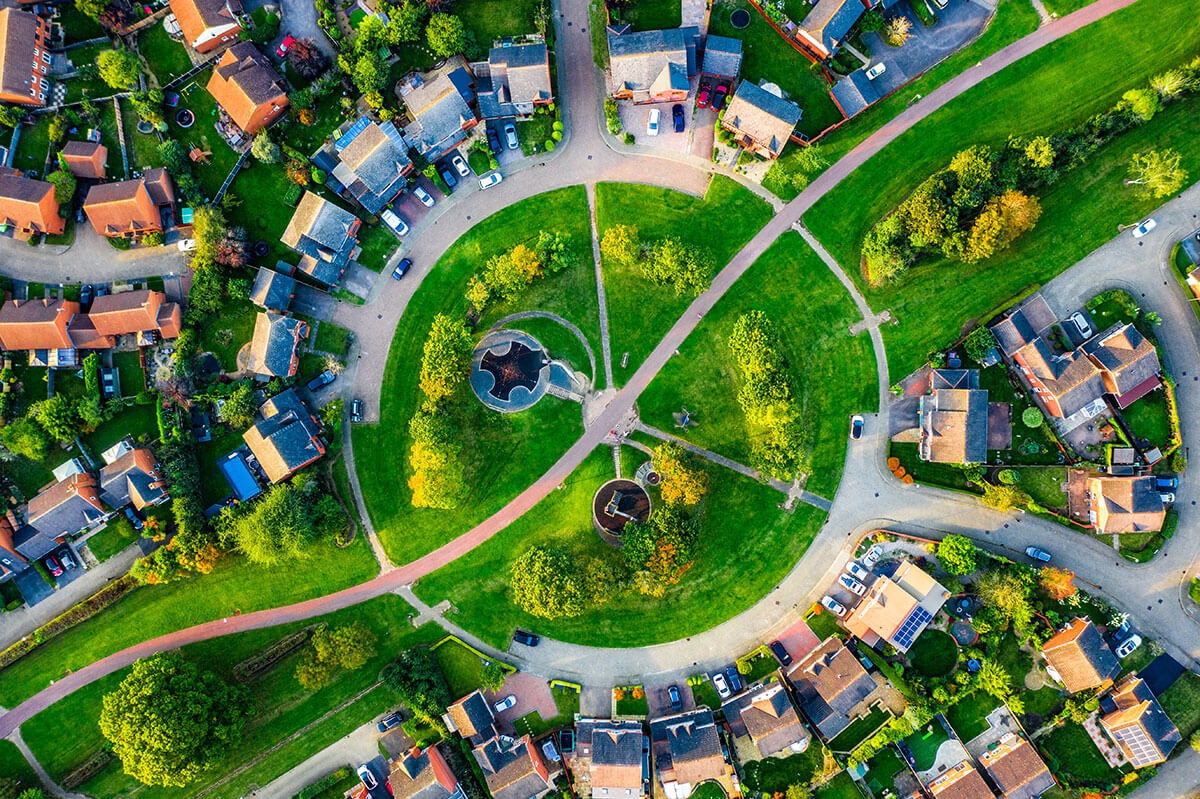
“A picture is worth a thousand words, but a high-resolution aerial photograph could be worth millions in infrastructure savings.”
Large Format Aerial Photography is rapidly redefining how industries visualise, document, and analyse the world below. By capturing exceptionally detailed imagery across vast areas, this technique enables decision-makers to gain deep, spatially accurate insight without ever setting foot on the ground. These aren’t your average drone snapshots. We're talking about high-altitude, high-precision imagery taken using advanced cameras mounted to fixed-wing aircraft — cameras powerful enough to capture entire cities in razor-sharp clarity.
At African Consulting Surveyors, we deploy large format systems to support clients across Africa’s most demanding sectors, providing them with unmatched data for infrastructure, environmental studies, and strategic planning. When done right, this method does more than take pictures — it builds the backbone of better decisions.
It all started with hot air balloons and black-and-white film. In 1858, balloonist Gaspard-Felix Tournachon took the first known aerial photo over Paris. Fast-forward to today, and aerial photography has evolved into a science-powered industry. Large Format Aerial Photography now harnesses precision-calibrated lenses, massive image sensors, and flight-planned coverage grids to generate data at resolutions that were once unimaginable.
Advancements in digital photography, GPS systems, and cloud computing have transformed these images into multi-purpose spatial datasets. They now serve as critical inputs in everything from land development to environmental modelling and even historical preservation.
High resolution is what gives Large Format Aerial Photography its competitive edge. A single image can cover several square kilometres while still capturing fine ground details — road markings, roof conditions, vegetation density, you name it. This precision is essential for accurate 3D Modelling, especially when your project demands centimetre-level measurements across expansive terrains.
Unlike small format or handheld drone images, which often require hundreds of stitched-together files, large format systems reduce the margin of error by minimising distortion and increasing uniformity across image datasets. For tasks like volumetric calculations, infrastructure auditing, or flood risk analysis, this accuracy is critical.
Government agencies and private developers depend on high-quality, up-to-date spatial data for planning roads, bridges, and utility networks. Large Format Aerial Photography supports their need for detailed surface information, which can be integrated directly into CAD and GIS systems for site development and compliance reviews.
In coastal and riverine zones, pairing aerial photography with hydrographic surveys gives planners the best of both worlds — a top-down view of land-water interfaces and depth profiles of the underwater terrain. This helps predict erosion patterns, monitor wetland health, and assess environmental impact for infrastructure projects near sensitive areas.
For mining companies, high-resolution imaging is used to monitor pit edges, tailing dams, and access roads. When combined with GPR surveys (Ground Penetrating Radar), companies can also assess subsurface risks. Together, these tools create a comprehensive spatial narrative that reduces downtime and improves site safety.
In farming regions, aerial imagery assists in mapping crop health, planning irrigation layouts, and evaluating land use changes over time. The clarity and scale of large format images enable agricultural consultants to spot subtle shifts in soil condition or vegetation patterns before they become expensive problems.
Before breaking ground, most developers require a detailed site survey. Traditionally, this would involve days or weeks of on-the-ground work. Now, a single aerial imaging flight can replace hundreds of manual measurements. When integrated with drone surveys, the result is a multi-layered dataset that captures both large-scale context and site-specific nuance.
One of the most exciting benefits of large format aerial imagery is how seamlessly it integrates into post-capture workflows. Architects and engineers regularly use these images as the foundation for 3D modelling, enabling everything from structural planning to visual simulations. When you're building in complex terrains or retrofitting existing infrastructure, having access to high-fidelity aerial data isn’t just useful — it’s transformative.
Models created from aerial data allow teams to assess sun exposure, drainage, access routes, and slope conditions before anything is built. They’re also crucial in scenarios where ongoing monitoring is needed, such as phased construction, vegetation encroachment, or risk assessments in flood-prone zones.
At African Consulting Surveyors, we believe that seeing the bigger picture — literally — leads to better outcomes. While technologies like drone surveys and satellite imagery have their place, large format systems offer a level of reliability, accuracy, and clarity that those options can’t match for wide-area coverage. Particularly when you need archival-quality data that can stand up to regulatory or legal scrutiny, there is no substitute.
The aerial imaging you choose is more than just a snapshot. It's an investment in the accuracy and efficiency of your project. That’s why we continue to invest in state-of-the-art technology and training — to ensure our clients receive the best aerial data on the continent.
As the demand for real-time geospatial intelligence grows, we’re already exploring integrations with machine learning, thermal imaging, and automated change detection. These tools will allow clients to not only see the present but forecast the future. From tracking urban sprawl to monitoring vegetation change or planning smart cities, Large Format Aerial Photography is the visual infrastructure for tomorrow’s insights.
At African Consulting Surveyors, we don’t just take pictures. We deliver precision data that informs, enhances, and accelerates your projects. Let us show you how the view from above is reshaping the ground below.