

"When efficiency and precision matters"
www.africansurveyors.com
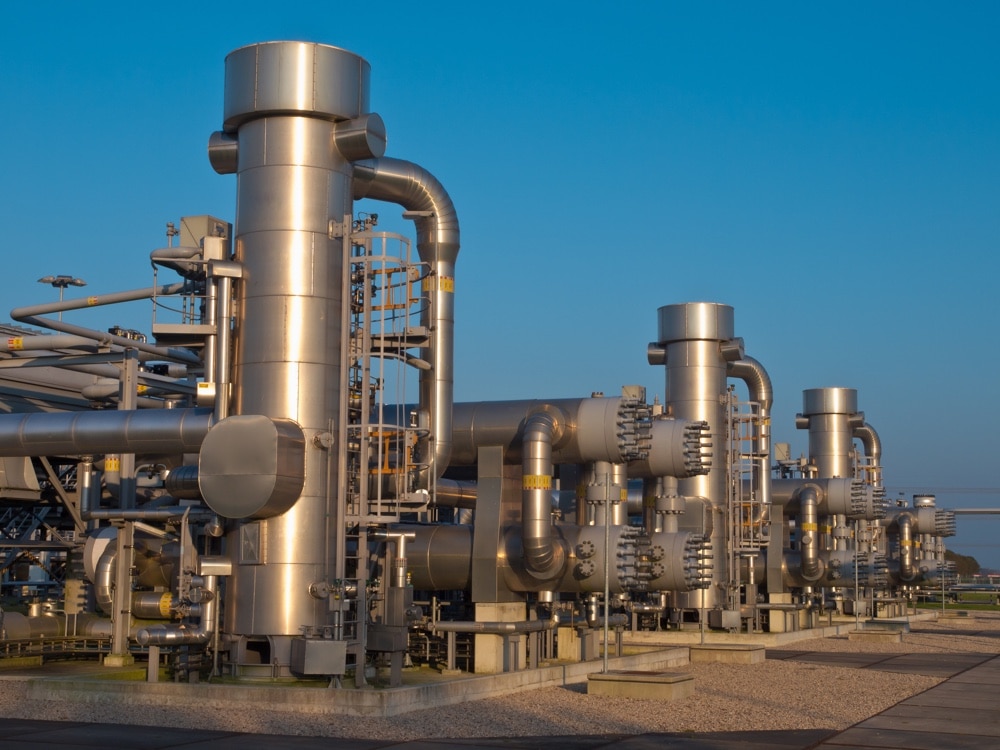
“Modern industry is built not just on raw materials, but on how efficiently and safely we transform them.” – Anonymous Engineer
From steelworks to bread factories, every product we touch has passed through some form of industrial transformation. What we call processing plants are the physical spaces where raw materials become usable products. These facilities may look unassuming from the outside—but inside, they’re home to complex machinery, strict safety systems, and razor-sharp precision. In this post, we break down processing plants examples from key sectors, unpack how they operate, and highlight the role of survey technologies in enhancing performance and safety.
A processing plant is not just a factory—it’s a carefully engineered environment where specific transformations occur. Materials arrive in one form and leave in another, often after going through several stages like heating, mixing, chemical reaction, purification, or packaging.
In essence, processing plants balance technical innovation, safety, and efficiency. And these three pillars must work together, or the entire system breaks down.
Every process plant shares a few fundamental components. There’s the physical infrastructure: tanks, pipes, valves, and control panels. But there's also the invisible web of software systems, like SCADA and DCS, that allow a process plant operator to monitor, tweak, and respond to any hiccups in real-time.
Operators aren’t working alone. They rely on a combination of historical data, live sensors, and remote modelling—yes, even tech like monitor for 3D modelling—to simulate, troubleshoot, and optimise production. From maintenance planning to emergency response, this modelling allows engineers to make informed decisions, fast.
Let’s begin with one of the most relatable industries: food. Think of wheat becoming flour, milk becoming cheese, or vegetables becoming canned goods. Food processing plants combine physical processes like washing, chopping, cooking, and packaging. But beyond that, there’s a heavy layer of hygiene control and product traceability.
These plants require strong zoning strategies—clean areas, raw storage, allergen separation—and rely on consistent, high-volume throughput. Safety is non-negotiable. One blocked pipe or cross-contamination event can shut the entire operation down.
Now shift to a more volatile environment. Chemical processing plants manufacture everything from plastics to pharmaceuticals. Here, temperature, pressure, and timing matter immensely. Tiny errors can lead to massive consequences—leaks, explosions, or systemic failures.
Because of these risks, lidar aerial mapping is increasingly used in pre-construction and maintenance phases. These high-resolution maps help layout equipment with minimal spatial risk and ensure emergency routes remain accessible. The result is a facility that works not just hard, but smart—and safely.
In mining and metallurgy, the focus is on extraction, purification, and alloying. These plants are built to take raw ores and refine them into usable materials like iron, copper, or aluminum. Unlike food or chemical processing, metal plants often operate in remote, rugged locations.
That’s where maritime tools come into play. A hydrographic survey vessel, for instance, can chart seabed conditions to support undersea mining or ensure stability near coastal refineries. The insights they provide help engineers avoid geological instability, especially when expanding port access or pipeline routes.
Behind all the automation and tech is the human element. Process plant operators are trained to interpret sensor readings, respond to alarms, and follow emergency procedures. But humans make mistakes—especially in environments filled with noise, heat, and pressure.
To mitigate these risks, designers are turning to ergonomics and safety modeling. It's no longer just about machines—it’s about interfaces, signage, lighting, and layout. Are shutoff valves accessible? Is the control room isolated from vibrations? Questions like these save lives. And they reduce costly downtime.
Before any of these systems go live, the groundwork must be perfect. At African Consulting Surveyors, we’ve seen how foundational data—from a cadastral survey that defines land rights to the mapping of underground services—can make or break a processing project.
If property lines aren’t accurate, legal challenges could halt construction. If underground utilities are misidentified, excavation could be dangerous. Everything begins with data. Reliable, accurate, spatial data.
The future of process plants is connectivity. Advanced systems will talk to each other. A maintenance sensor will trigger a real-time 3D model update. A GIS overlay will show utility maps, ownership rights, and hazard zones—all at once.
It’s already happening in plants built with processing plants examples in mind. These facilities integrate design, engineering, and operations from day one. They use predictive analytics. They model disasters before they happen. They recycle heat and water. And they make business sense.
From flour mills to chemical reactors, all processing plants share a common mission: to transform. But how they succeed—safely, efficiently, and sustainably—depends on how well we plan, monitor, and adapt.
African Consulting Surveyors supports this journey by providing the surveying, mapping, and modelling that form the foundation of every successful project. Whether you're planning a new facility, expanding an existing one, or auditing performance, understanding processing plants examples helps you build better, smarter, and safer.