

"When efficiency and precision matters"
www.africansurveyors.com
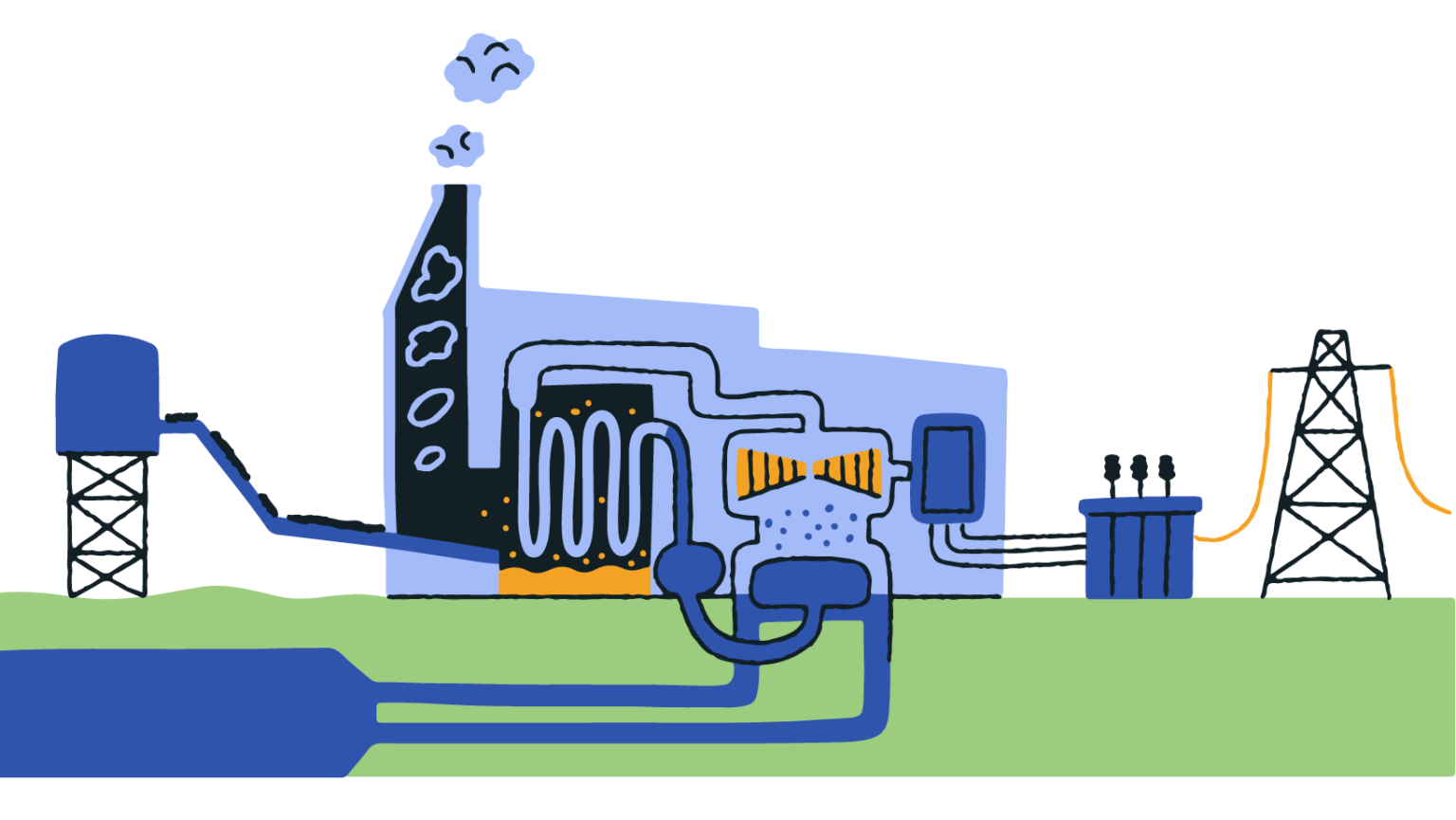
“Coal remains a cornerstone in global electricity generation, powering over a third of the world's energy needs.” Despite the rise of renewable energy sources, coal-fired power plants continue to play a significant role in meeting energy demands. At African Consulting Surveyors, we delve into the intricacies of the coal plant process, shedding light on each phase from mining to electricity distribution.
The coal plant process initiates with the extraction of coal from the earth. Depending on the depth and geology, mining methods vary between surface mining and underground mining. Once extracted, coal undergoes preparation to remove impurities, ensuring optimal combustion efficiency.
Prepared coal is then pulverized into a fine powder, increasing its surface area for efficient burning. This pulverized coal is transported to the boiler, where it is combusted to generate heat.
In the boiler, the combustion of pulverized coal produces intense heat, converting water into high-pressure steam. This steam is the driving force behind the turbines, propelling them to generate electricity.
The high-pressure steam flows into turbines, causing them to spin at high speeds. These turbines are connected to generators, which convert mechanical energy into electrical energy. The generated electricity is then stepped up in voltage for transmission across power grids.
After passing through the turbines, the steam enters condensers where it is cooled and converted back into water. This water is recycled back into the boiler, maintaining a continuous loop in the coal plant process.
Modern coal plants are equipped with emission control systems to minimize environmental impact. Technologies such as electrostatic precipitators and scrubbers are employed to reduce pollutants released into the atmosphere.
At African Consulting Surveyors, we utilize advanced technologies to enhance the efficiency and safety of coal plant operations.
LiDAR (Light Detection and Ranging) maps provide high-resolution topographic data, essential for planning and monitoring coal plant infrastructure.
Hydrographic survey equipment is used to map underwater features, crucial for coal plants located near water bodies for cooling purposes.
Various engineering surveys, including topographic, geotechnical, and structural surveys, are conducted to ensure the integrity and safety of coal plant structures.
Understanding the difference between 2D and 3D modelling is vital in coal plant design and analysis. While 2D models provide basic layouts, 3D models offer comprehensive visualizations, aiding in better decision-making.
Ground Penetrating Radar (GPR) is employed to detect subsurface anomalies, ensuring the stability of foundations and identifying potential hazards in coal plant sites.
The coal plant process is a complex interplay of various stages, each critical in ensuring efficient electricity generation. By integrating advanced surveying technologies, African Consulting Surveyors enhances the safety, efficiency, and sustainability of coal-fired power plants. As the energy landscape evolves, understanding and optimizing these processes remain paramount.