

"When efficiency and precision matters"
www.africansurveyors.com
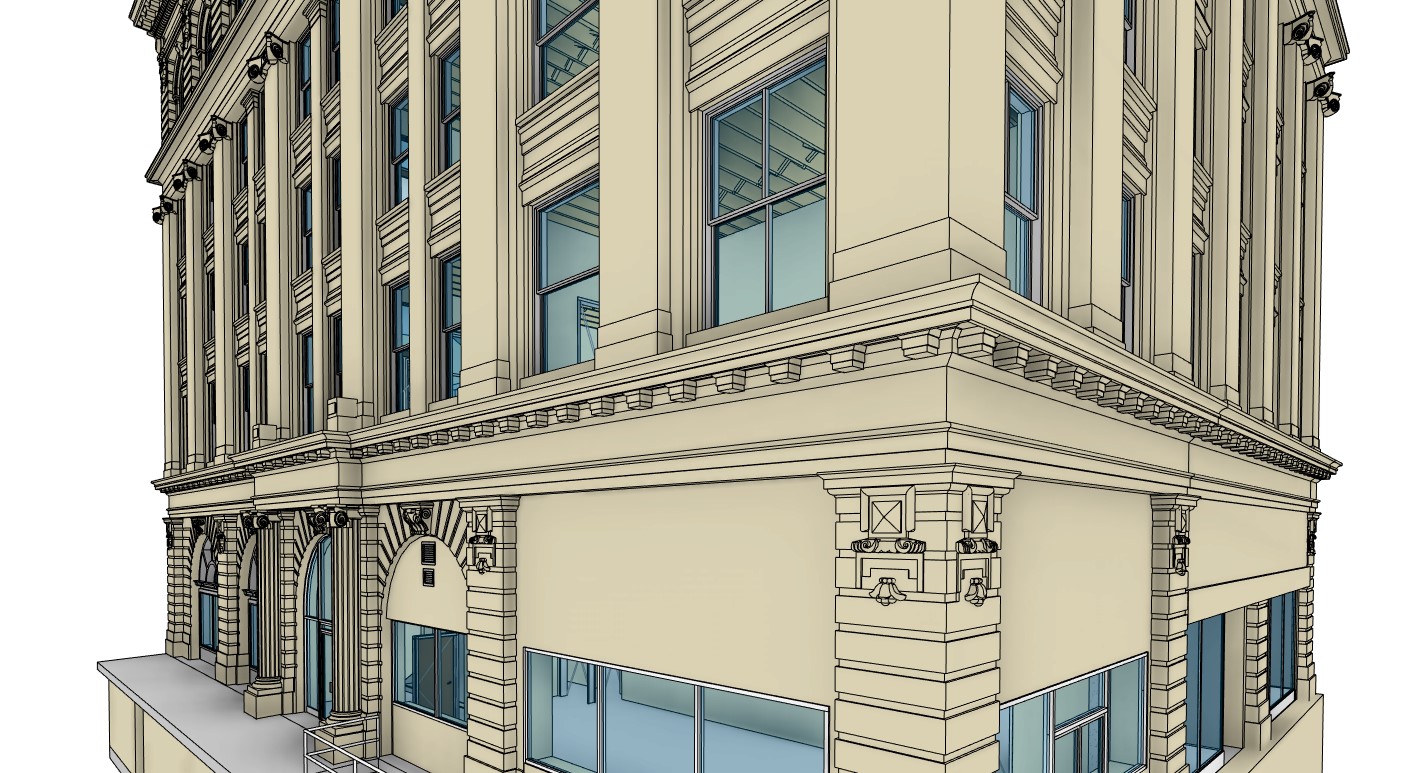
In an era where time, accuracy, and adaptability define success, 3D scanning has quietly become one of the most transformative technologies across global industries. From reverse engineering complex machinery to preserving ancient artifacts, the benefits of 3D scanning are far-reaching and remarkably practical. And here in Africa, it's helping professionals—from engineers to archeologists—unlock a new realm of possibility.
At African Consulting Surveyors, we’ve seen firsthand how 3D scanning simplifies what was once manual, time-consuming, and prone to error. Let’s dive into why this technology is worth the attention of any forward-thinking business or institution.
A 3D scanner captures real-world objects and converts them into detailed digital models. The result? A perfect virtual replica that can be viewed, measured, manipulated, and tested—without ever touching the original item again.
Whether you’re a manufacturer fine-tuning a component or a medical technician building a custom prosthetic, the benefits of 3d scanning come down to one word: confidence. Confidence in your measurements. Confidence in your data. Confidence in your next step.
The beauty of 3D scanning lies in its ability to capture the most intricate details with sub-millimeter precision. This accuracy is non-negotiable in industries like aerospace, automotive, and medical design. A 0.01mm miscalculation might seem small—but in mission-critical environments, it's the difference between excellence and failure.
We've used handheld scanners on archaeological digs, where replicating fragile relics requires not only a gentle touch but a highly accurate scan. Likewise, in a Property Survey, 3D scanning allows us to capture existing structures with extraordinary precision—no guesswork involved.
Traditional measurement methods are slow, manual, and expensive. 3D scanning flips this equation. You get rapid capture times, repeatable results, and fewer resources spent fixing mistakes later in the process. That means shorter lead times and faster project turnaround—without compromising on quality.
In sectors like mining or infrastructure development, integrating 3D data with a geological survey in civil engineering allows teams to avoid rework, reduce waste, and accelerate development timelines. It’s smart business and even smarter engineering.
With Quality 4.0 taking hold, dimensional inspection is no longer optional—it’s strategic. Using 3D scans, we can compare manufactured parts to original CAD designs in seconds, flagging even the smallest discrepancies before they become costly errors.
Whether we’re supporting coal preparation plant process layouts or scanning turbine blades in the energy sector, this data empowers teams to validate and verify in real time. And because scanning is non-contact, there's no damage risk to delicate components or prototypes.
Many industries rely on parts that no longer have schematics or documentation. That’s where the benefits of 3d scanning shine. Engineers can scan the legacy part, recreate its geometry in CAD, and replicate or improve upon it—fast.
This has practical implications across the board, including gpr survey services, where buried infrastructure or unknown materials must be modeled and analyzed before new work can begin. By combining subsurface data with accurate 3D models, project managers get a clearer picture of the full landscape—above and below ground.
The versatility of 3D scanning is perhaps its most exciting trait. It’s not just for manufacturing and engineering—it’s revolutionizing healthcare, forensic science, cultural heritage, and digital design.
In the art world, we’ve helped museums preserve ancient artifacts in digital form for future generations. In law enforcement, scanned data is now admissible in court to reconstruct crime scenes. And in digital design, it’s used to build hyper-realistic characters and environments for films and games.
Let’s not forget the growing interest in geospatial technology jobs. Professionals entering this field are expected to master tools like 3D scanning, alongside GIS, drone mapping, and laser scanning. These roles are foundational to how we understand and design the physical world around us.
The benefits of 3d scanning aren’t theoretical. They’re real. They’re measurable. And they’re changing how we design, analyze, and improve nearly every aspect of the built and natural environment.
At African Consulting Surveyors, we don’t just use this technology—we advocate for it. Because we’ve seen what happens when a company moves from assumption to certainty. From reactive to predictive. From manual to modern.
3D scanning is not a luxury. It’s an upgrade. And in today’s high-stakes world of infrastructure, heritage, and innovation, that upgrade could be the difference between leading and lagging.
If you want to work smarter, not harder, you know what to do. Let’s scan the future—together.