

"When efficiency and precision matters"
www.africansurveyors.com
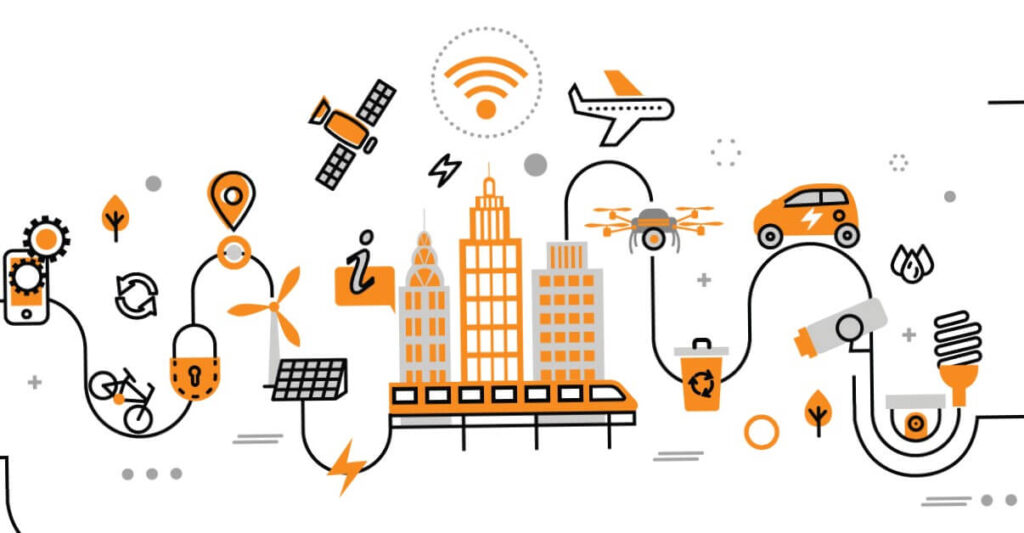
"Everything happens somewhere." Whether it’s tracking environmental changes, planning new infrastructure, or optimizing business operations, location-based insights are transforming industries. Geospatial technology has emerged as a cornerstone of modern data analysis, offering businesses and governments the ability to make smarter, faster, and more precise decisions.
This field is not just about maps. It encompasses satellite imagery, GPS, remote sensing, and advanced data visualization techniques that turn raw location data into actionable insights. From construction and urban planning to environmental monitoring and asset management, geospatial solutions are driving efficiency, reducing risks, and unlocking new opportunities.
At its core, geospatial technology refers to the tools and techniques used to collect, analyze, and visualize spatial data. It allows industries to interpret geographic patterns, predict trends, and optimize workflows. The three main pillars of geospatial technology are Geographic Information Systems (GIS), Remote Sensing (RS), and Global Positioning Systems (GPS). Together, they enable businesses to navigate complex challenges and improve decision-making with location-based intelligence.
To fully grasp the power of geospatial technology, it’s important to understand the two main types of geospatial data: vector and raster data. Vector data represents geographic features using points, lines, and polygons, making it ideal for mapping roads, buildings, and property boundaries. Raster data, on the other hand, consists of grid-based images, including aerial photographs and satellite imagery, which provide detailed topographic and environmental insights. When combined, these datasets create comprehensive visualizations that support industries in planning, monitoring, and executing large-scale projects.
In the world of engineering surveys, accuracy is everything. The ability to capture precise site conditions and terrain details ensures that infrastructure projects are built to last. Surveying professionals use geospatial tools to generate highly detailed 3D Scanning models of construction sites, allowing engineers to make adjustments before a single brick is laid. This reduces costly errors, improves safety, and streamlines project timelines.
Industrial facilities, particularly process plants, rely on geospatial technology to maintain operational efficiency and compliance. Whether it’s monitoring pipeline networks, analyzing facility layouts, or improving workflow automation, spatial data provides plant managers with the intelligence needed to enhance productivity. LiDAR Mapping plays a crucial role in these environments by capturing highly detailed, three-dimensional representations of industrial sites, ensuring accurate planning and maintenance.
Cities are expanding at unprecedented rates, making urban planning more complex than ever. With a growing need for sustainable development, geospatial technology is revolutionizing how cities are designed and managed. Planners use GIS to model traffic patterns, assess environmental risks, and optimize public services. By leveraging location intelligence, governments and developers can make informed decisions that improve city livability while minimizing ecological impact.
Sustainable management of natural resources depends on accurate and up-to-date data. Remote sensing technologies allow conservationists, researchers, and policymakers to track deforestation, water levels, and climate change impacts in real time. Geomatics Companies in South Africa are using geospatial solutions to map protected areas, monitor biodiversity, and mitigate environmental threats. With this data, industries can strike a balance between economic growth and environmental responsibility.
Artificial intelligence is taking geospatial technology to new heights. Machine learning algorithms can analyze vast datasets in seconds, uncovering trends and anomalies that would take humans weeks to identify. This advancement is particularly valuable in fields such as disaster response, where AI-driven geospatial tools can predict weather patterns, assess damage after natural disasters, and coordinate emergency efforts with unprecedented accuracy.
The shift toward cloud-based GIS platforms has made geospatial data more accessible than ever. Businesses, governments, and researchers can now collaborate in real time, sharing insights and developing solutions faster. With mapping-as-a-service models on the rise, industries no longer need to invest in expensive software or hardware—everything they need is available on demand.
LiDAR Mapping is not just for industrial applications—it’s playing a pivotal role in autonomous vehicle navigation, precision agriculture, and even archaeological discoveries. The ability to create detailed 3D maps of landscapes and urban environments is revolutionizing industries that depend on spatial accuracy. As technology advances, LiDAR will become even more integral to smart cities, automation, and high-tech surveying solutions.
Location intelligence is no longer a luxury—it’s a necessity. From infrastructure development and environmental conservation to industrial efficiency and disaster response, geospatial technology is shaping the way we understand and interact with the world. Businesses that integrate spatial data into their decision-making processes gain a competitive edge, improving efficiency, reducing costs, and unlocking new opportunities.
At African Consulting Surveyors, we specialize in providing cutting-edge geospatial solutions tailored to your industry’s needs. Whether you require 3D Scanning for infrastructure projects, LiDAR Mapping for industrial applications, or expert support in engineering surveys, our team is equipped to deliver precise, data-driven insights. The future is geospatial—let us help you navigate it with confidence.